

If ChatGPT has ever given you disappointing answers, the problem might not be the AI—it might be the way you’re asking. Learn simple prompting techniques that produce clearer, more useful responses.
Have you ever typed a question into ChatGPT…
Read the answer…
And thought,
“That wasn’t very helpful.”
You’re not alone.
Many people try ChatGPT once or twice, feel disappointed, and assume the technology isn’t as impressive as everyone claims.
But here’s something surprising.
The quality of the answer often depends on the quality of the question.
Think about asking a stranger for directions.
If you simply ask,
You’ll probably get a confusing answer.
But if you ask,
“I’m visiting Maldives for three days, I love beaches, local food, and photography. What places would you recommend?”
The answer becomes far more useful.
ChatGPT works in a similar way.
The more context you provide, the more helpful the response can become.
The Biggest Mistake Beginners Make
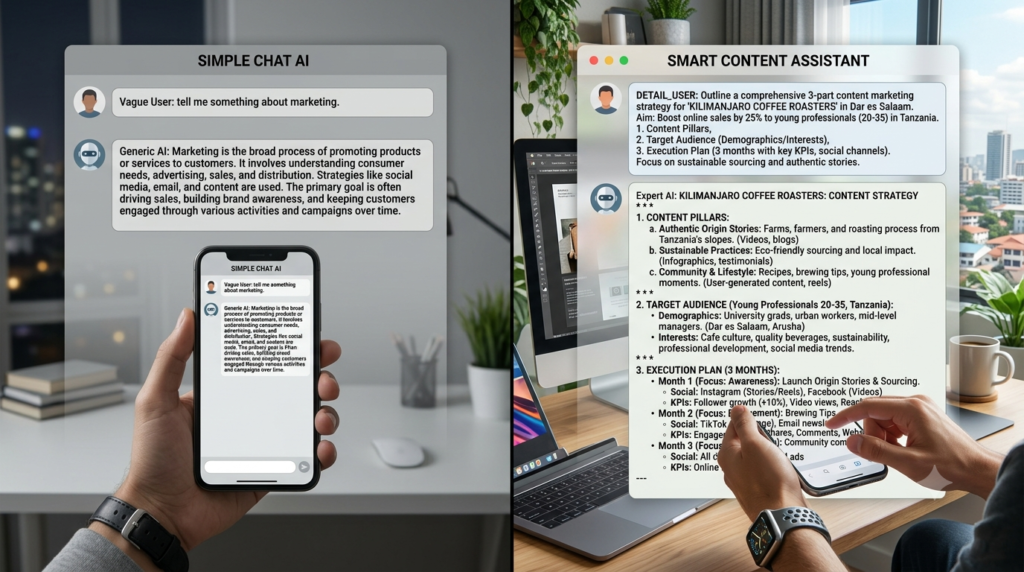
Most people treat ChatGPT like a search engine.
They type one short sentence.
Then expect a perfect answer.
For example:
❌
“Write me a blog.”
That request leaves too many unanswered questions.
What topic? Who is the audience? How long should it be? What tone should it use? Should it be educational? Professional? Friendly?
Without context, even the best AI has to guess.
And guesses rarely produce outstanding results.
ChatGPT Performs Best When You Give It a Job
Instead of thinking,
“I’m asking a question.”
Try thinking,
“I’m giving someone a role.”
For example:
Instead of saying:
“Write a product description.”
You could say:
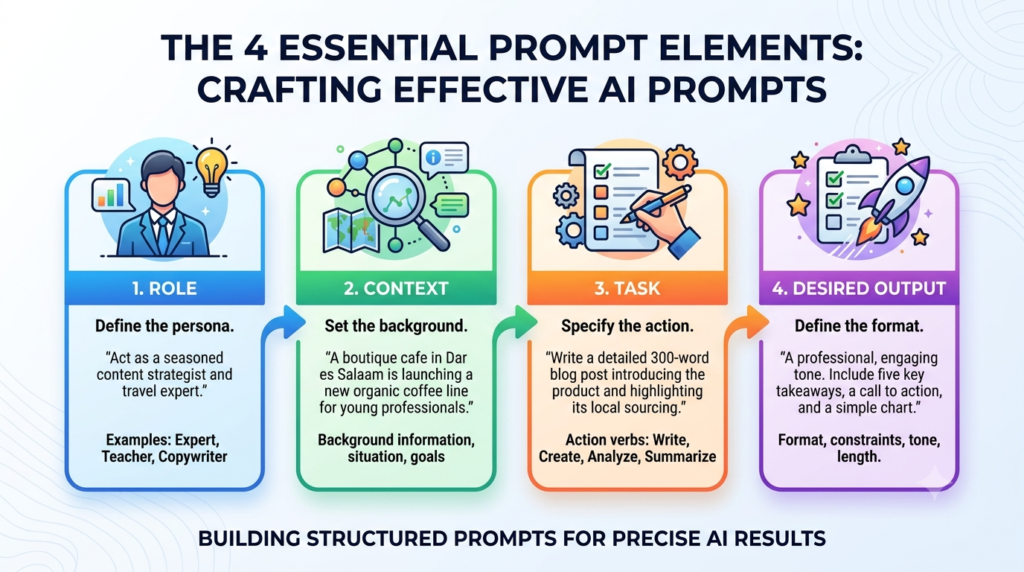
“Act as an experienced e-commerce copywriter. Write a product description for a portable Bluetooth speaker aimed at college students. Keep it under 150 words and highlight portability, battery life, and sound quality.”
Notice the difference.
The second prompt gives ChatGPT a role, an audience, a goal, and clear expectations.
That simple change often produces dramatically better results.
Better Questions Lead to Better Conversations
One of the biggest misconceptions about AI is that every prompt must be perfect.
It doesn’t.
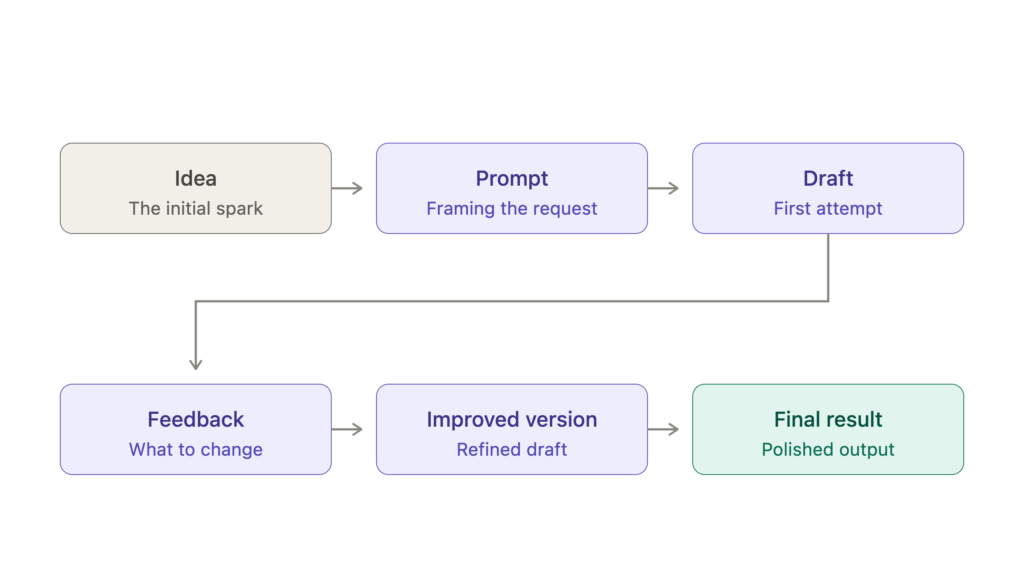
The best results often come through conversation.
Ask a question. Read the answer. Clarify your request. Ask for examples. Request improvements.
Just as you would when working with a colleague, you can continue refining the conversation until the result becomes exactly what you need.
Good prompting is less about writing one perfect sentence. It’s about guiding the conversation.
A Simple Framework Anyone Can Use
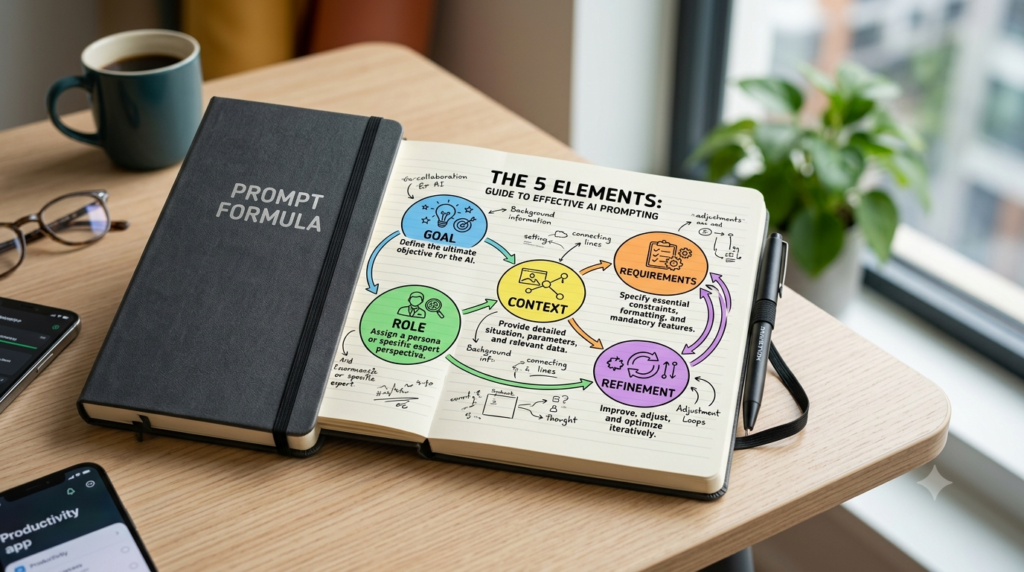
If you’re unsure where to start, remember these five simple ingredients whenever you write a prompt:
🎯 Goal
What do you want ChatGPT to help you accomplish?
👤 Role
Who should ChatGPT pretend to be?
For example:
- Teacher
- Marketing expert
- Lawyer
- Fitness coach
- Graphic designer
📍 Context
Explain the background.
Why are you asking?
Who is the audience?
What situation are you solving?
📋 Requirements
Mention the length.
Tone.
Style.
Language.
Formatting.
Anything important.
🔄 Refinement
If the first answer isn’t perfect…
Don’t start over.
Improve the conversation by asking follow-up questions.
That’s how experienced users work with AI.
ChatGPT Is a Skill—Not Just a Tool
Learning how to ask better questions is becoming a valuable digital skill.
Students use it to study.
Business owners use it to brainstorm ideas.
Writers use it to organize articles.
Marketers use it to improve campaigns.
Developers use it to solve coding problems.
The more you practice writing clear prompts, the more useful AI becomes.
Like any skill, improvement comes through experience rather than perfection.
The Best ChatGPT Users Don’t Ask Better Questions Overnight
Like any skill, prompting improves with practice.
The first time you use ChatGPT, your prompts may be short and unclear.
That’s completely normal. Over time, you’ll begin noticing patterns. You’ll discover which instructions produce better answers. You’ll learn how much context to provide. You’ll become more comfortable refining responses instead of expecting perfection immediately. Experienced users rarely receive perfect answers on the first attempt.
They improve the conversation one step at a time. That’s what makes prompting a skill—not a shortcut.
Think Like a Conversation, Not a Command
One mistake many beginners make is treating ChatGPT like a vending machine.
Type one sentence.
Receive one perfect answer.
Real productivity doesn’t usually work that way.
Instead, imagine you’re working with a knowledgeable assistant.
You explain your goal.
Review the response.
Ask for changes.
Request examples.
Simplify difficult sections.
Add missing details.
Every follow-up helps shape a stronger final result.
The quality often comes from collaboration rather than the first response.
Prompting Is Becoming a Valuable Digital Skill
Not long ago, knowing how to search Google efficiently was considered an important digital skill.
Today, knowing how to communicate effectively with AI is becoming just as valuable.
Professionals across many industries are already using prompting to save time and improve the quality of their work.
For example:
- Students use AI to explain difficult concepts.
- Writers organize articles and brainstorm outlines.
- Entrepreneurs develop business ideas.
- Marketers generate campaign concepts.
- Designers explore creative directions.
- Customer support teams draft responses more efficiently.
The technology may be different.
But the principle remains the same.
Clear instructions lead to clearer results.
Practice Is More Valuable Than Memorization
Many people search for the “perfect prompt.”
In reality…
There isn’t one.
The best prompt is the one that helps you solve your specific problem.
Instead of memorizing dozens of prompts, learn the structure behind them.
Ask yourself:
- What am I trying to accomplish?
- What background information does the AI need?
- Who is the audience?
- What format should the answer follow?
- What would make the response more useful?
Once you understand these questions, creating prompts becomes much easier.
You’re no longer copying.
You’re thinking.
Small Improvements Create Better AI Results
Imagine improving your prompts by just 5% every week.
After a few months, you’ll notice something remarkable.
Your responses become:
- More accurate.
- Better organized.
- More relevant.
- Easier to use.
- Faster to produce.
The AI hasn’t changed.
Your communication has.
That’s why learning to ask better questions is one of the most valuable habits you can develop when working with modern AI tools.
A Simple Prompt Challenge
Before you leave this page, try this exercise.
Instead of asking a short question like:
“Write me an article.”
Try adding:
- Your goal.
- Your audience.
- The tone you want.
- The desired length.
- The output format.
Then compare the new response with the first one.
Notice the difference.
The exercise takes only a few minutes, but it can completely change the way you use AI.
Final Thoughts
Artificial intelligence is becoming part of everyday life.
But the people who get the greatest value from it aren’t necessarily using more advanced software.
They’re communicating more clearly.
They’re giving better instructions.
They’re asking better questions.
Prompting isn’t about learning complicated tricks.
It’s about thinking clearly enough to explain what you want.
The better you communicate, the better AI can assist you.
And that’s a skill that will remain valuable long after individual AI tools continue to evolve.
Frequently Asked Questions
Do I need technical knowledge to write good prompts?
No. Clear thinking and clear communication are far more important than technical knowledge. Anyone can improve with practice.
Is there a perfect prompt?
Not really. The best prompt depends on your goal, your audience, and the type of result you’re trying to achieve.
Should I keep asking follow-up questions?
Yes. Some of the best results come from refining the conversation instead of expecting the perfect answer immediately.
Can prompt writing improve productivity?
Absolutely. Well-structured prompts can save time, reduce revisions, and help you generate more useful responses for writing, research, planning, and many other tasks.
Key Takeaways
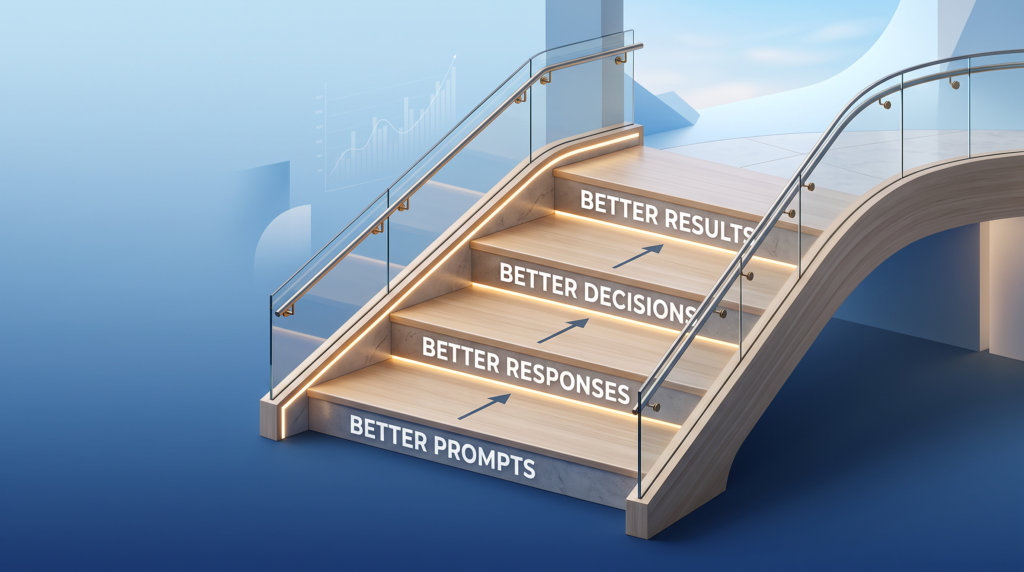
- Better prompts usually produce better responses.
- Treat ChatGPT like a conversation, not a search engine.
- Provide context, goals, and clear instructions.
- Improve your prompts through practice rather than memorization.
- Communication is becoming one of the most valuable AI skills.
1000+ ChatGPT Prompts
If you’d like to deepen your understanding of prompt writing, look for resources that teach structured prompt frameworks, practical examples, and real-world applications across writing, business, education, marketing, and productivity. The more examples you study and practice, the more naturally you’ll begin writing prompts that produce consistently better results.